
The MCCore Platform
Unified Solutions.
Knowledge management, on-call scheduling, digital forms, task tracking, clinical rounding, and policy compliance — six production-ready modules, one unified platform. AI is available across all of them, but never required.
6 shipping today. You can license them one at a time.
 01
Knowledge OS
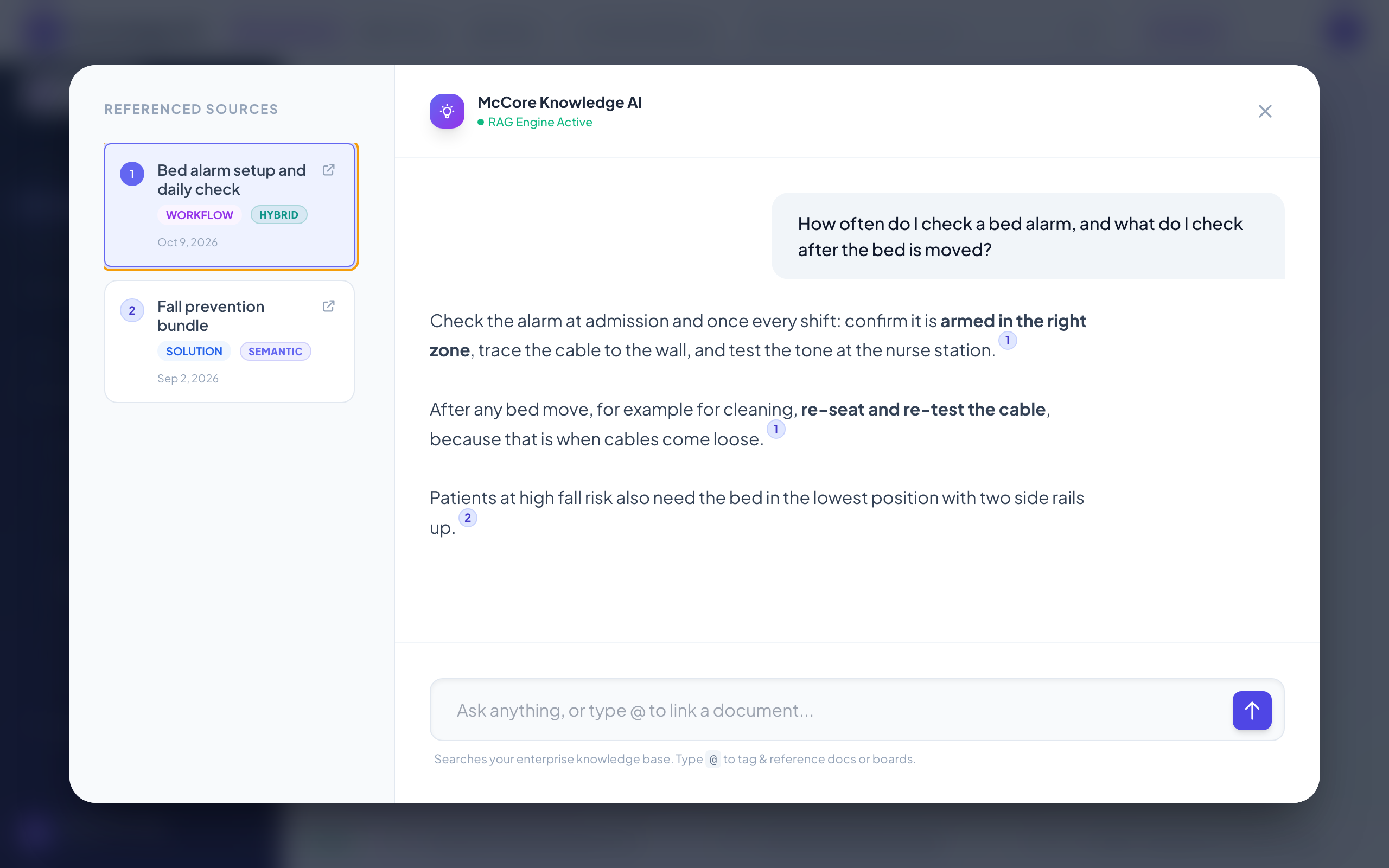
Every procedure, guide and reference your departments rely on, in one library staff can actually search. Authors start from templates, a reviewer approves before anything publishes, and staff can ask a question in plain words and get an answer that cites the articles it came from.
See the product
01
Knowledge OS
Every procedure, guide and reference your departments rely on, in one library staff can actually search. Authors start from templates, a reviewer approves before anything publishes, and staff can ask a question in plain words and get an answer that cites the articles it came from.
See the product
 02
Intelligent Forms Engine
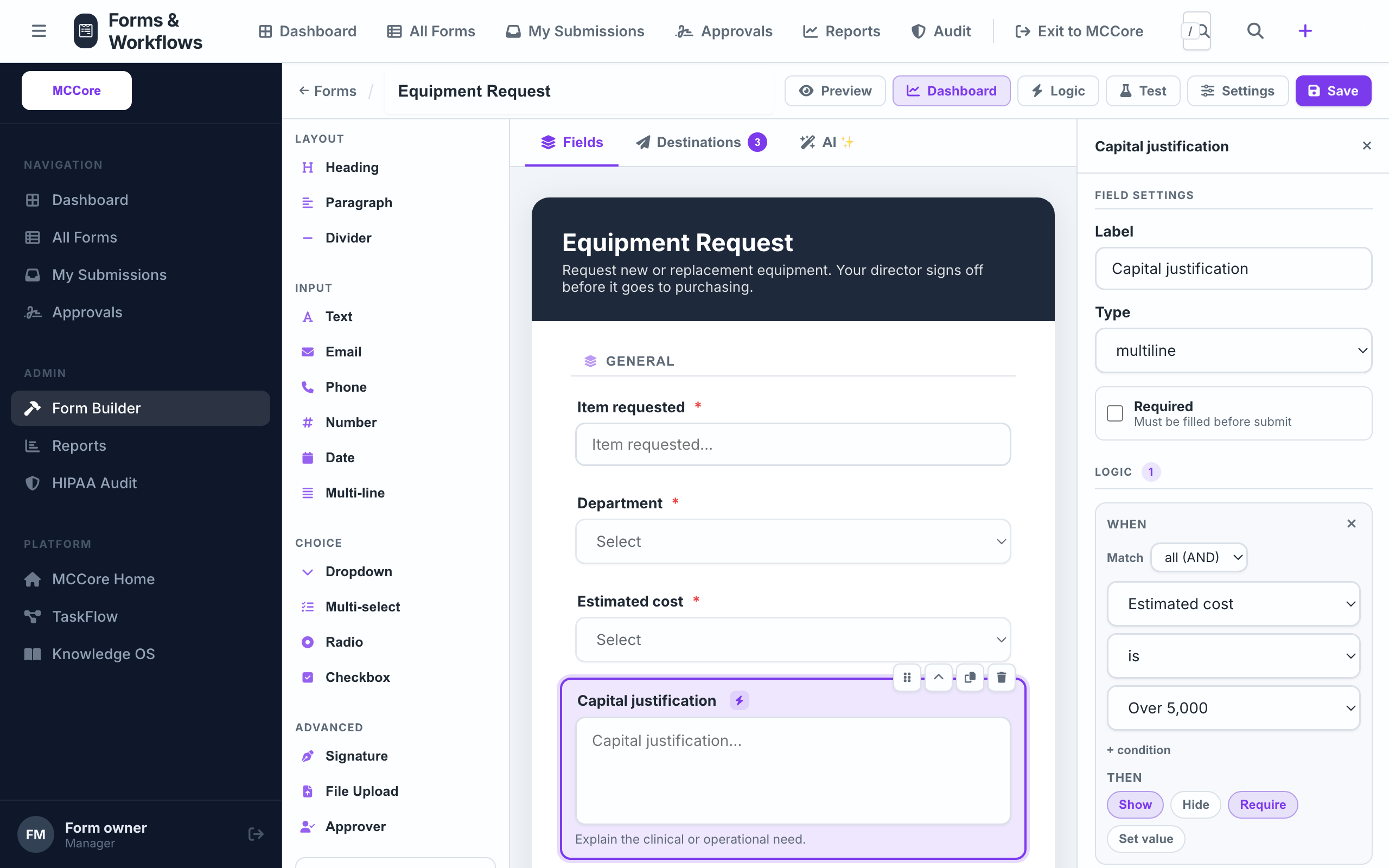
Turn the requests, reports and sign-offs your departments still run on paper and email into forms that route themselves. Build with drag and drop, add logic so people only see what applies to them, collect signatures, and send every completed submission straight into TaskFlow, notifications, email or a webhook.
02
Intelligent Forms Engine
Turn the requests, reports and sign-offs your departments still run on paper and email into forms that route themselves. Build with drag and drop, add logic so people only see what applies to them, collect signatures, and send every completed submission straight into TaskFlow, notifications, email or a webhook.
 03
On-Call Scheduler
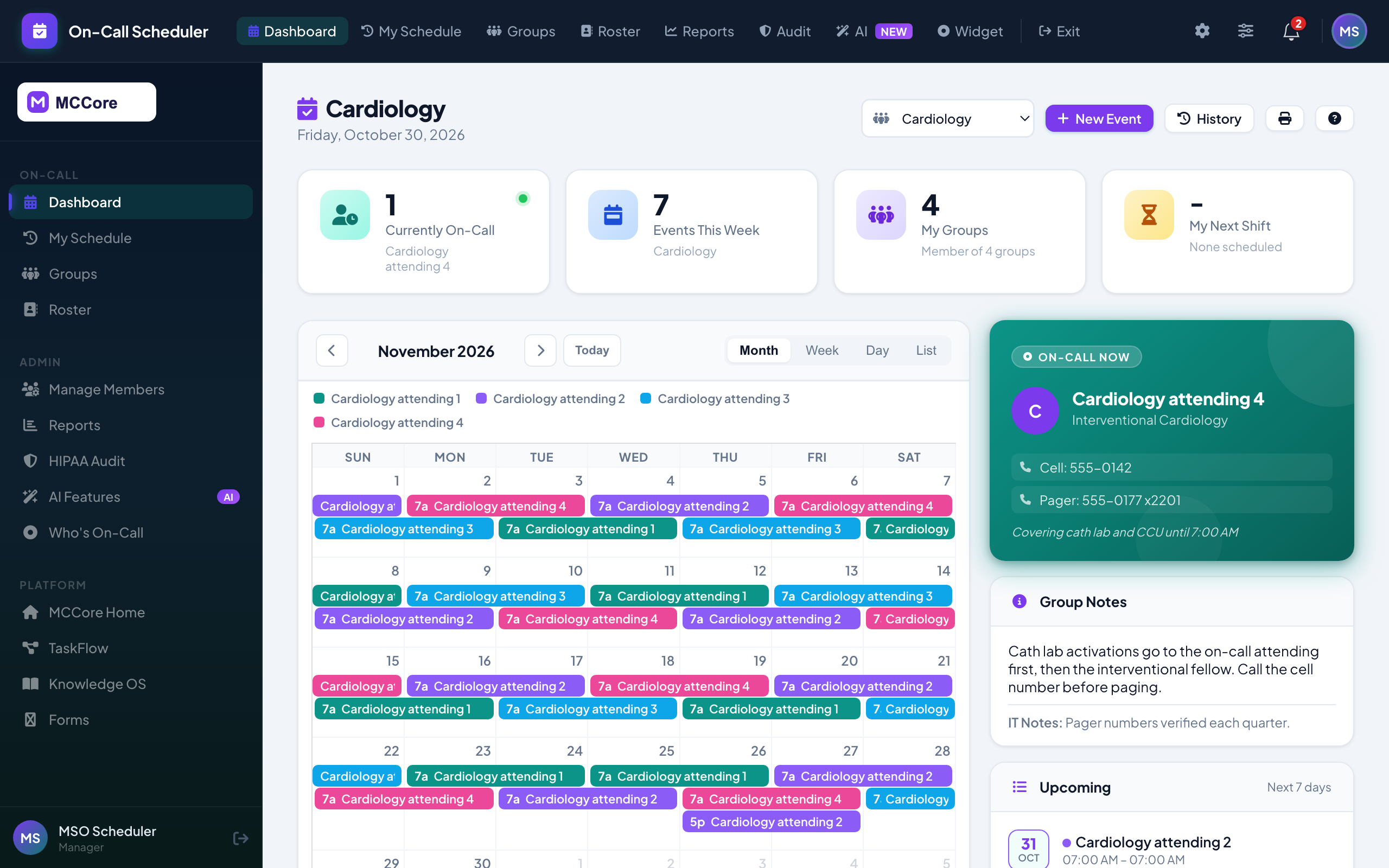
A live on-call calendar for every service, with the numbers to reach each person. AI finds coverage gaps and drafts fair fills for you to approve, the conflict check catches double bookings, the switchboard sees who is on right now, and clinicians get their shifts in their own calendar.
03
On-Call Scheduler
A live on-call calendar for every service, with the numbers to reach each person. AI finds coverage gaps and drafts fair fills for you to approve, the conflict check catches double bookings, the switchboard sees who is on right now, and clinicians get their shifts in their own calendar.
 04
TaskFlow
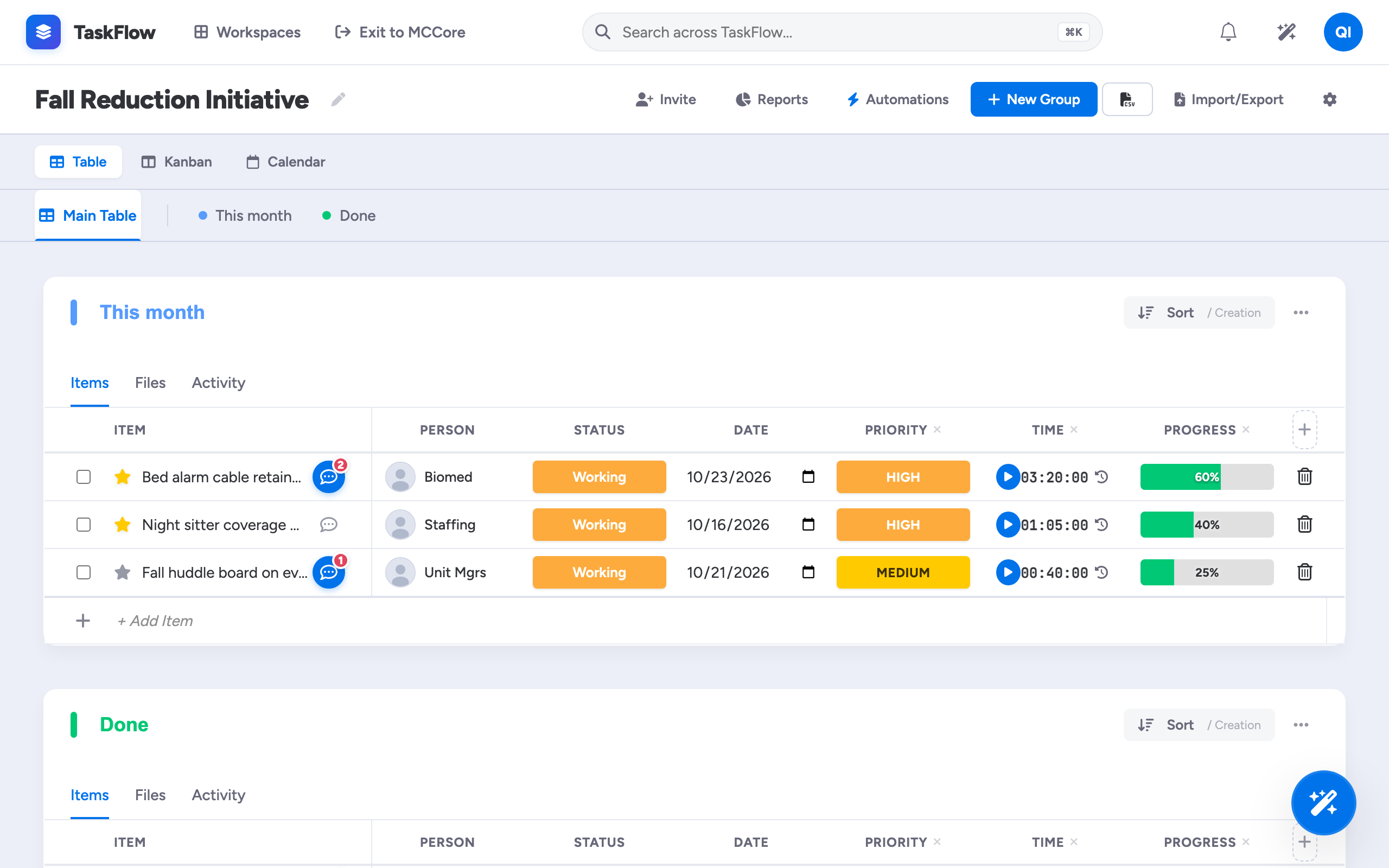
Boards for the projects and operational work that cross departments. Every item has an owner, a status and a date, conversations and files live on the item, automations flag what is stuck, and leadership reads status from live reports instead of asking for it. On the web and on iOS and Android.
04
TaskFlow
Boards for the projects and operational work that cross departments. Every item has an owner, a status and a date, conversations and files live on the item, automations flag what is stuck, and leadership reads status from live reports instead of asking for it. On the web and on iOS and Android.
 05
Operational Rounds
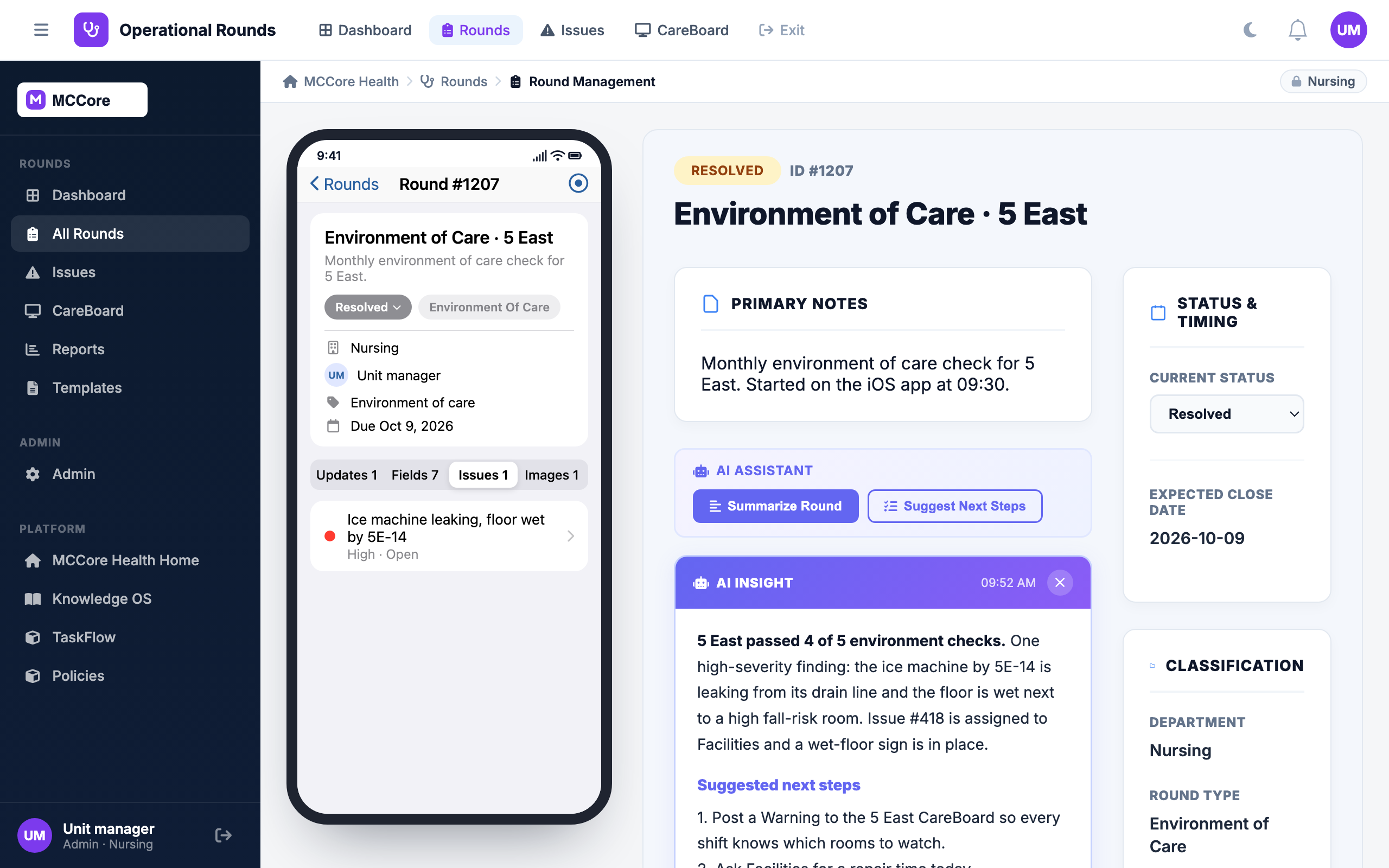
Rounding that ends in a fix. Leaders round from a phone against templates you design, problems become issues with an owner, a severity and a photo, the unit's CareBoard tells every shift what to watch for, and leadership sees how fast each unit closes the loop.
05
Operational Rounds
Rounding that ends in a fix. Leaders round from a phone against templates you design, problems become issues with an owner, a severity and a photo, the unit's CareBoard tells every shift what to watch for, and leadership sees how fast each unit closes the loop.
 06
Policy & Procedure Manager
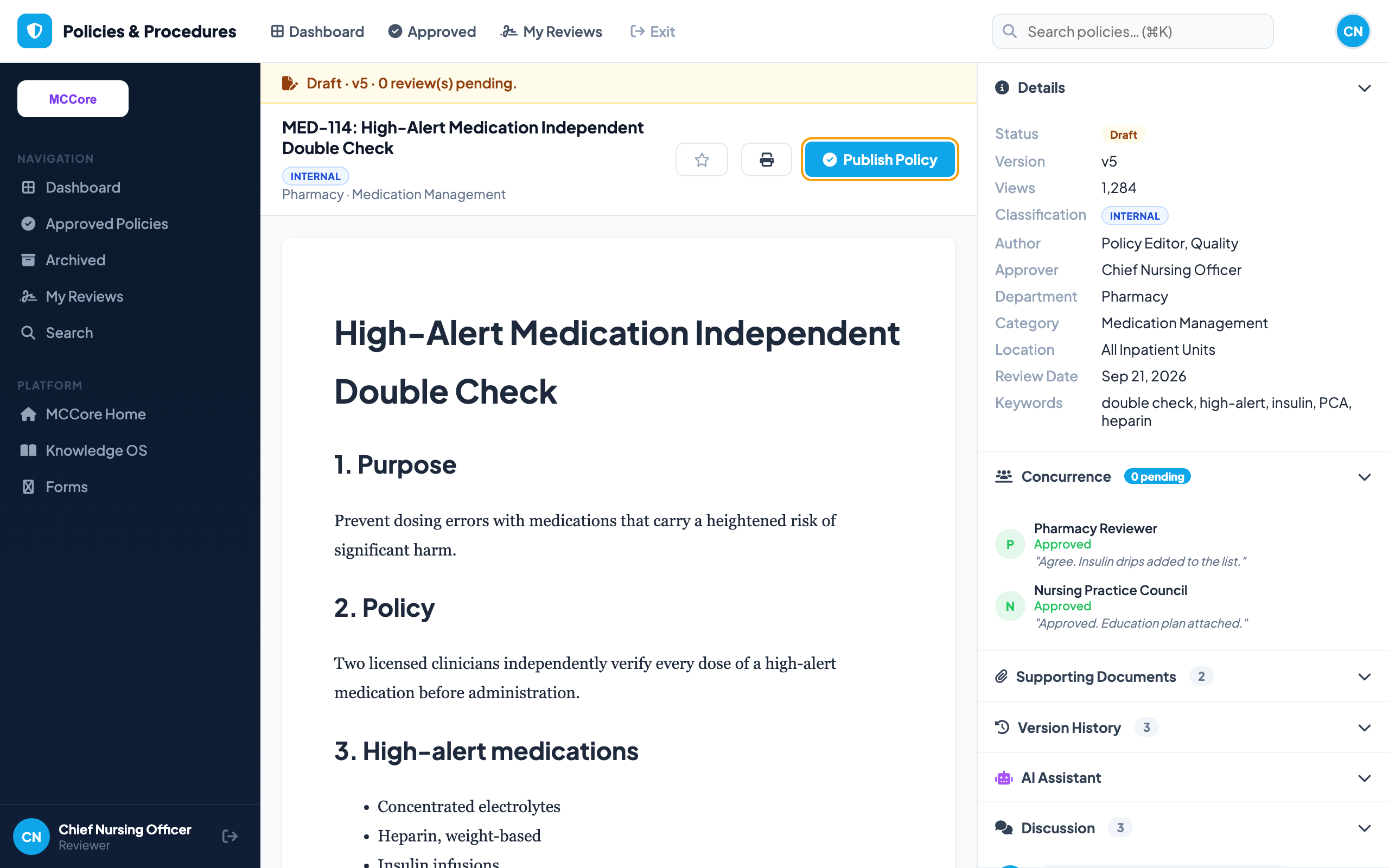
Write, review, approve and publish policies with the controls an accreditation survey expects, and make them easy for front-line staff to find, understand and acknowledge. Editors check policies out, concurrence reviewers sign off and a final approver publishes. Staff find the current version by typing, browsing or asking AI, and confirm required reading on each new version. Every version, decision, view and acknowledgment is kept.
06
Policy & Procedure Manager
Write, review, approve and publish policies with the controls an accreditation survey expects, and make them easy for front-line staff to find, understand and acknowledge. Editors check policies out, concurrence reviewers sign off and a final approver publishes. Staff find the current version by typing, browsing or asking AI, and confirm required reading on each new version. Every version, decision, view and acknowledgment is kept.
Nothing matches that filter.
You do not have to buy all six to start.
Licensing is per module. Subscribe to one, add the others whenever a department asks. Single sign-on, role-based access and the audit trail ship with every one of them, and the ones you have not licensed stay dark and cost nothing.
The same six jobs, counted two ways.
Nothing here is about features. It is about how many of each thing your team ends up maintaining once the sixth tool is in place.
The last row is the one that shows up in an audit finding. On a single directory, removing someone removes them everywhere, in the same transaction.
The differences are the parts you see.
The parts you do not see are identical on purpose, and that is the whole reason running two of these costs less than running two products.
The audit trail is not a feature, it is the floor
Every module writes the actions that matter to a HIPAA audit trail: changes, approvals, exports and, where they matter, views, each with who and when. On-Call goes further and hash-chains its entries so a broken link shows.
AI is a switch you hold, not a premise you accept
Search, summaries, autofill and generation exist in every module as per-tenant flags. Each is a switch per organization, and a single master switch turns all of them off at once.
One directory underneath all of it
Add a department lead once and her role and permissions resolve across every module you license. Remove her once and the access goes with her, everywhere.
Native apps where the work is on foot
Rounding and task updates get done standing up. The iOS and Android apps for Rounds and TaskFlow are real clients on the same token-authenticated API the web app uses.
Bring the department
that is struggling.
Half an hour on your own workflow is usually enough to tell whether a module fits. We would rather start there than walk you through all six.